Kinds of technology
When a partner says they are considering AI, or a vendor demonstrates a platform, the name covers the visible part and omits what decides how the product behaves, what it costs, and who bears the risk when it fails. A product can be separated into the technologies inside it, and each of those placed by five distinctions. Other schemes sort technology other ways, and the published ones are collected further down.
It is written to be used twice: on the case you choose for the Ethics Case Analysis, and on whatever your partner brings to the Technology Strategy Pitch. The companion page, Kinds of AI systems, sorts the AI family and the differences among AI models; this one covers technology at large.
Technology or product
The first question is whether the object under examination is a technology or a product assembled from technologies.
Machine learning is a technology. Distributed ledgers, computer vision, speech recognition, satellite positioning, accelerometers, and public-key cryptography are technologies. A case management system is none of them; it is a database, a set of forms, a permissions model, and a workflow, sold together under one name. A fall detector is none of them either; it is an accelerometer, a classifier, a radio, and a notification service. An AI scribe is a bundle too; it is a microphone, a speech recognition model, a language model, and a hosting arrangement.
The distinction has teeth because vendors sell products while naming technologies. Reviewing 2,830 European startups presented as AI companies, MMC Ventures found evidence that AI was material to the value proposition in about 60 percent of them, 1,580 companies. The familiar version of this finding, that 40 percent of AI startups use no AI, restates the remainder and does not appear in the report. The claim is now enforceable, since the SEC charged two investment advisers in March 2024 for false statements about their use of AI and the FTC brought five cases against deceptive AI claims in September 2024, which means “none” is sometimes the accurate answer to what technology a product contains.
Parts of a product
Naming the technologies inside a product is the step that comes before analysis, because a question that bites on one part often says nothing about another. A case management system comprises the four parts listed above, and a decision about the permissions model is not a decision about the database.
Once the parts have names, the course already has the instrument for interrogating them. The Sociotechnical protocol asks who designed a technology and who was in the room when the problem was defined, whose data and labor make it run, what it assumes about its users and who breaks those assumptions, who bears the risk when it fails, what it replaced, and who maintains it in year five. A demonstration rarely shows the component that makes the decision, and the protocol can be run on each component separately.
Types of technology
Five distinctions describe any technology, with or without a model in it.
| Type | Choices | Effect |
|---|---|---|
| Form | Hardware, software, infrastructure | What is budgeted and what remains invisible |
| Position | Application, platform, infrastructure | How much notice arrives before it changes |
| Decider | Rules, a model, a person | Whether the logic can be read |
| Location | On the device, on your server, on a vendor’s system | Which building the data is stored in |
| Audience | Clients, practitioners, managers, data services | Whose work changes |
Form
Hardware is visible and is budgeted, and software is neither. Blanchette argues that every bit still has a physical medium, and Chun describes how software’s apparent immateriality draws attention away from the hardware and labor under it. Infrastructure, read that way, is the part an organization uses and does not control.
Position
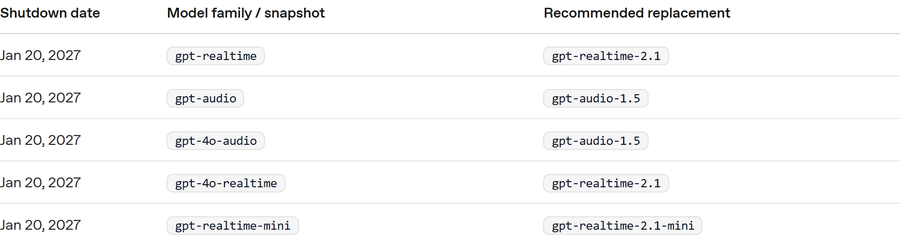
NIST’s definition of cloud computing names three layers, software, platform, and infrastructure as a service, and the further down a dependency is, the less say an organization has when it changes. Vendors publish the schedule: OpenAI commits to six months’ notice for a generally available model and as little as two weeks for a preview one, and Anthropic to sixty days.
Decider
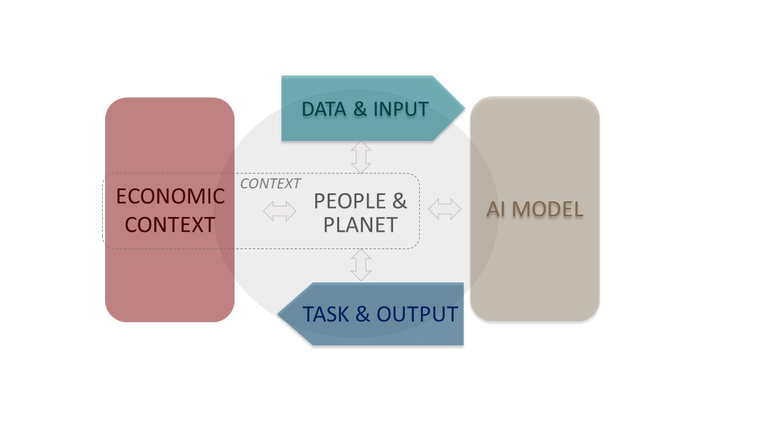
The OECD’s classification separates systems built from human-written rules from those that learn from data. Rules can be read line by line, a model can be examined through its behavior, and a person can be asked for reasons. Michigan’s MiDAS was rules.
Location
For substance use disorder records, 42 CFR 2.12 binds an outside vendor as a qualified service organization before it may receive them; a system running in your own building makes no disclosure at all. This is Week 7’s data sovereignty question in its procurement form.
Audience
The four groups are the World Health Organization’s, from its classification of digital health interventions and the 2023 second edition, which sorts by whom an intervention serves. A tool aimed at a client and a tool aimed at a worker can be identical on the other four distinctions and still raise different questions: consent, access, and exclusion for the first; workload, oversight, and surveillance for the second. The second edition gives eleven subcategories for the health care provider group alone, from generating a record to providing decision support to delivering training. The evidence on each side is examined on the client-facing and practitioner-facing pages.
Self-check
Each item names something the page or the technology terms glossary has already covered. Sort it: a technology is a capability, a product is a system assembled from technologies and sold under one name, and a concept is an idea or a critique rather than a product anyone buys. Two items take two answers. Nothing is graded, and answers remain in this browser until you press reset.
Most items take one answer and two take two. Select every option that applies, then press Check for that item. An item cannot be changed once it is checked.
Other published classifications
Whether the politics are built in. Langdon Winner asked in 1980 whether an artifact’s political consequences are inherent in its design or come from how it is deployed. Some technologies require a particular arrangement to work at all; others are compatible with several and take their politics from the setting. Asking which kind is in question separates a design problem from a deployment problem.
Whether it is still governable. Collingridge’s dilemma names a trade-off that every procurement encounters: early on, a technology is easy to change and its effects are unknown; later, the effects are visible and the technology is too embedded to move. Placing a tool on that timeline predicts how much influence the organization still has.
Whether it is a tool or infrastructure. Susan Leigh Star’s properties of infrastructure tell the two apart by how they behave rather than what they are: infrastructure is embedded in other structures, invisible in use, learned as part of joining a community of practice, built on an installed base, and visible only when it breaks. A tool is used intermittently. An electronic record system passes every one of Star’s tests, so an outage feels different from an app not working.
How much decision authority the human keeps. The in-the-loop, on-the-loop, and out-of-the-loop distinction comes from the autonomous weapons debate and transfers directly: does a person approve each action, oversee it with the ability to override, or not intervene at all. For a finer scale, Parasuraman, Sheridan, and Wickens separate four stages of automation from information gathering to acting, each of which can be automated to a different degree.
What the law will ask of it. The EU AI Act sorts AI systems into unacceptable risk, high risk, limited risk, and minimal risk, and the tier decides the obligations. Systems used in hiring, credit, and essential services fall into the high-risk tier. The tiers are a useful sorting exercise even for a US organization, because they name what a regulator considers consequential.
Which professional standard applies. The NASW, ASWB, CSWE, and CSWA technology standards sort by the practice domain a technology belongs to: providing information to the public, designing and delivering services, gathering and storing client information, and educating and supervising social workers. A tool that moves from one domain to another acquires a different set of obligations.
How much technology is in it at all. Assistive technology practice uses a plain three-tier convention, no-tech, low-tech, and high-tech, described by the Assistive Technology Industry Association. A ramp, a picture board, and an eye-gaze communication system all solve access problems, and the highest tier is not automatically the right answer.
The sustaining and disruptive innovation pair from Bower and Christensen is the most quoted classification in this space. When King and Baatartogtokh examined 77 cases the theory itself cites, only a minority satisfy all of its elements.
Emerging technology
The phrase collects whatever is currently visible. Ask a room to name emerging technologies and the answers arrive in a predictable order: generative AI, virtual and augmented reality, wearables and sensing, digital twins, blockchain, quantum computing. The technology terms glossary defines each of these and forty more, and notes which ones are doing marketing work. Case management systems, scheduling tools, and state data standards are rarely named, and they set the shape of a working week in most organizations.
Week 1 defines the term in a way worth adopting, the five attributes Rotolo, Hicks, and Martin name. Two of the five do the work here, prominent but still unrealized impact and lasting uncertainty about where it goes, and they explain how a technology can dominate a procurement conversation for three years and then disappear from it.
Google Trends search on technology terms
Google Trends plots search interest from 2004 to the present and compares up to five terms at once.
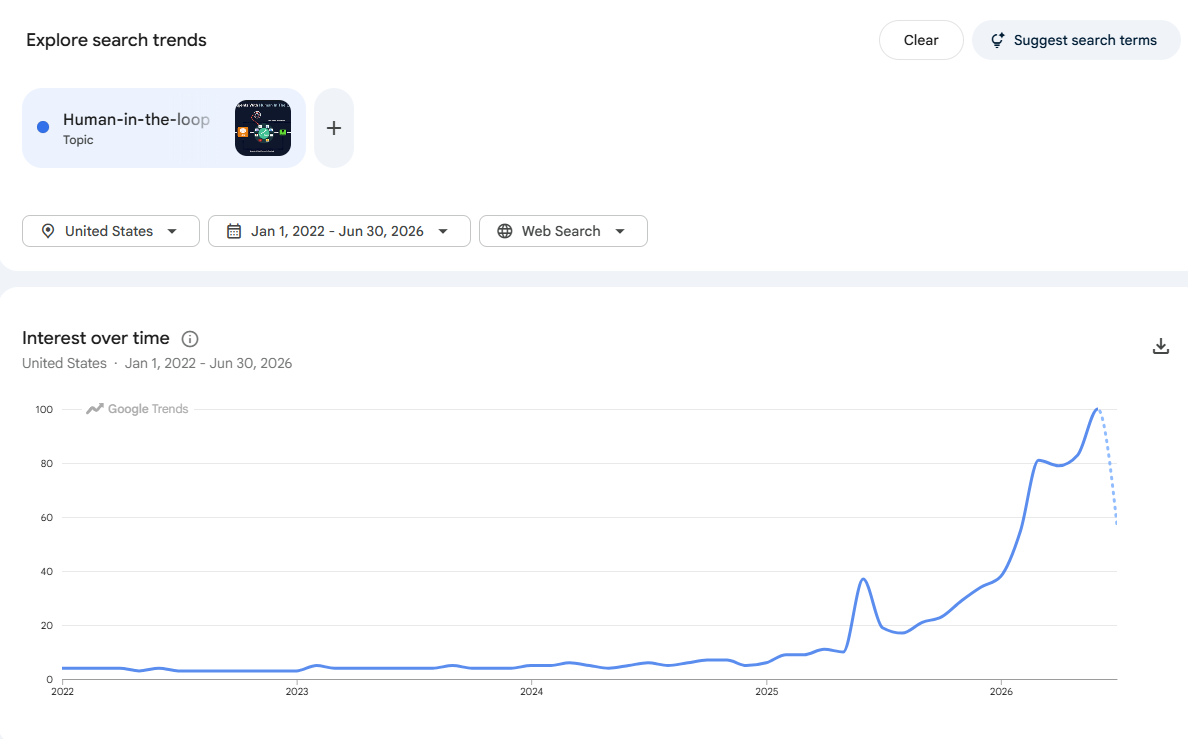
A curve in one of these charts usually takes one of five shapes:
- Rise and fall. A peak, then a decline that does not recover.
- Still rising. No peak yet inside the window.
- Flat and high. Present across the whole period without a spike.
- Flat and low. Present across the whole period and never spiked.
- Handover. One term falling while another climbs into its place.
- For each comparison below, write down which shape you expect each term to take, before you open the link.
- Open the comparison and name the shape each term actually took.
- Write down which prediction was wrong and what assumption produced the error.
Four comparisons:
- Second Life, metaverse, NFT
- data mining, big data, machine learning
- blockchain, cryptocurrency
- case management, electronic health record, telehealth
Then run one of your own: take a term an organization has used with you this term and put it against any term above.
Two limits bound what the charts can support. A search records attention, not adoption, not spending, and not whether anything worked. Interviewing eighteen procurement professionals across ten Swedish government agencies, Andersson, Arbin, and Rosenqvist found high interest in AI and two of the ten agencies actually using any AI tool. Google Trends also reports a relative index scaled to its own peak rather than a count of searches, so two separate charts cannot be compared by height.