Client-facing technology
Scope
A client-facing tool is aimed at the person receiving a service. The World Health Organization’s classification of digital health interventions treats this as the first sorting question, separating tools for clients from tools for providers, managers, and data services.
Most client-facing technology in a social service agency is not a therapeutic app and not AI. It is a text message about an appointment, an online benefits application, a records portal, an information line, and sometimes a device the client already owns. Those reach more people than anything in the digital-health literature, and the evidence on them is older and in places better. The companion page covers practitioner-facing technology, which raises a different set of questions.
Claims
A tool put in front of a client is sold on four arguments: that it is available when a service is not, that people disclose more to a screen than to a person, that it serves people distance or transport would exclude, and that it costs less per person served. Each one has been measured, with mixed results.
The naming in this literature is poor. One 2025 Cochrane review calls a single intervention “digital”, “technology-driven”, and “technology-assisted” in one title, and a review of definitions found 95 different definitions of “digital health” across 1,527 records.
Evidence
Appointment reminders
Across eight randomized trials with 6,615 participants, text-message reminders raised attendance from 67.8 to 78.6 percent, a risk ratio of 1.14 (95% CI 1.03 to 1.26), rated moderate quality. Against a phone call from a person the text performed the same, a risk ratio of 0.99 (95% CI 0.95 to 1.02), at 55 to 65 percent lower cost per attended appointment.
The finding holds in a caseload closer to a social impact setting than most of that trial evidence. In a community psychosis service in Lambeth, south London, 95 people were randomized to reminders at seven days and one day before the appointment, and missed appointments fell from 25 to 9 percent, an adjusted odds ratio of 2.95 (95% CI 1.05 to 8.85).
Applications, eligibility, and paperwork
The technology between a person and a benefit is the form and the renewal, and changing it moves enrollment more than most interventions in this course. In a randomized trial with about 30,000 older adults who were likely eligible for SNAP and not enrolled, nine-month enrollment was 6 percent with no contact, 11 percent with information alone, and 18 percent with information plus application assistance. The same trial reports that the people the intervention recruited had higher net income and were less sick than the average person already enrolled, so lowering the barrier changed who applied and not only how many.
Automated checks work in the opposite direction. Eligibility and income verification with automatic disenrollment, adopted by fifteen states between 2014 and 2020, reduced child Medicaid and CHIP enrollment by 3.1 percentage points, still 3.5 points down after twenty months. The effect was more than three and a half times larger for Hispanic children and about four times larger in households with limited English proficiency, which makes an automated eligibility check a language-access decision whether or not anyone framed it that way.
Automation can also be pointed at the paperwork instead of the person. The federal push on automatic Medicaid renewals raised the national ex parte rate from about 25 percent in April 2023 to 50 percent in April 2024; California went from 34 percent to 66 percent after software changes, and its disenrollment rate fell from 20 to 9 percent.
Portals and records access
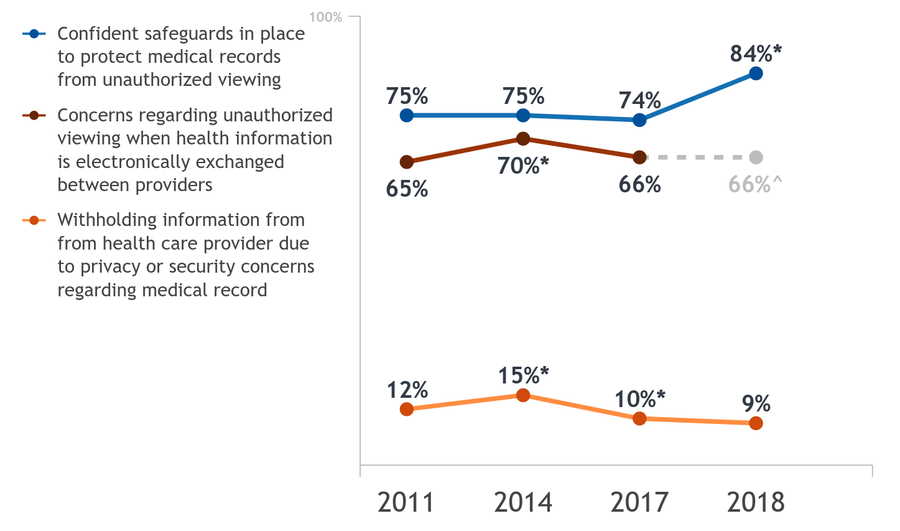
Offering access is not the same as use. Among people who were offered an online medical record and did not open it in the past year, 25 percent gave privacy or security of the record as a reason and 76 percent said they preferred to speak to a provider directly. A later national analysis of 4,328 patients put the privacy share of non-use at 19.75 percent, with higher odds among adults 65 and over (OR 1.79, 95% CI 1.22 to 2.66) and among Black and Hispanic patients (OR 1.42, 95% CI 1.09 to 1.84).
Withheld information
A record system changes what clients are willing to say. In a nationally representative survey, 12.3 percent of US adults (95% CI 10.8 to 13.8) had at some point withheld information from a health care provider because of concerns about the privacy or security of their medical record. A second national analysis of 4,753 adults found the same 13.0 percent rate and, after adjustment, higher odds of withholding among patients whose provider used an electronic record (OR 1.65, 95% CI 1.04 to 2.63). Withholding was concentrated in the groups a practitioner is most likely to serve: 13.0 percent of withholders had moderate depression or anxiety symptoms against 6.7 percent of non-withholders, and 17.5 percent were immigrants against 10.1 percent.
The same effect appears at the scale of a whole program when clients believe a record can reach immigration enforcement. In December 2019, 20.4 percent of adults in immigrant families with children reported that they or a family member had avoided SNAP, Medicaid or CHIP, or housing subsidies because of concern about future green card status, rising to 31.5 percent in low-income families. A county-level analysis estimated that the September 2018 announcement alone, before any rule took effect, corresponded to about 260,000 fewer children enrolled in Medicaid. In 2025, 51 percent of immigrant adults and 78 percent of those likely undocumented said they were concerned that health providers would share patient information with immigration authorities, and 14 percent overall and 48 percent of likely undocumented immigrants had avoided medical care for immigration-related reasons.
Anonymity and help-seeking
Disclosure has a design side, and it has been measured prospectively rather than after the fact. In a probability sample of 2,073 US adults fielded in June 2023, 60 percent said that their identity being anonymous to the person answering the call would make them more likely to contact the 988 Suicide and Crisis Lifeline. Anonymity was one of seven features rated and ranked fourth; speaking with a counselor immediately led at 77 percent, and when respondents picked a single most important feature, 51 percent chose that one and 17 percent chose anonymity.
The same poll supplies the comparison for the anonymity figure. Sixty percent agreed they would be afraid the police might hurt them or a loved one while responding to a mental health crisis, and that figure was 77 percent among Black respondents, 75 percent among Hispanic respondents, and 78 percent among LGBTQ+ respondents, against 53 percent among white respondents, which makes anonymity a condition of help-seeking rather than a preference about convenience.
Referral and information lines
A referral tool measures itself by referrals made; the client measures it by whether anything arrived. Following 1,235 Missouri callers to 2-1-1 for a month, 91 percent tried to contact a referral, 82 percent reached one, and 36 percent obtained assistance, with food at 67 percent and housing at 17 percent. Adding a person raises the first step: in a trial with 1,200 callers, 34 percent contacted a referral with a navigator against 24 percent with a tailored reminder and 18 percent with a verbal referral alone.
Apps, devices, and data flows
A consumer app’s handling of the data is a matter of public record, because regulators have been litigating it. An audit of 27 leading mental health apps found 81.7 percent of the servers they contacted were third parties, and 24 of the 27 privacy policies required at least a college reading level. The FTC’s complaint against BetterHelp records that it uploaded over 7 million visitor and user email addresses to Facebook and disclosed over 1.5 million people’s answer to the question “Have you been in counseling or therapy before?”; the order was finalized in July 2023 and refund notices went to about 800,000 people. The FTC took a separate action against GoodRx for sharing users’ prescription information with Facebook and Google for advertising, the first case brought under its Health Breach Notification Rule. Its complaint against the telehealth company Cerebral alleges that it provided the sensitive information of nearly 3.2 million consumers to third parties such as LinkedIn, Snapchat and TikTok through tracking tools on its website and apps.
The FTC’s order against Monument, an online alcohol addiction service, records that it disclosed the information of as many as 84,000 users, “though it did not have a precise number because it did not adequately track or inventory the personal information it collected and disclosed to third-party advertising platforms”. An organization that cannot say what left its systems cannot answer A3 or M2 on the protocol, and that is a question to ask a vendor before signing rather than after.
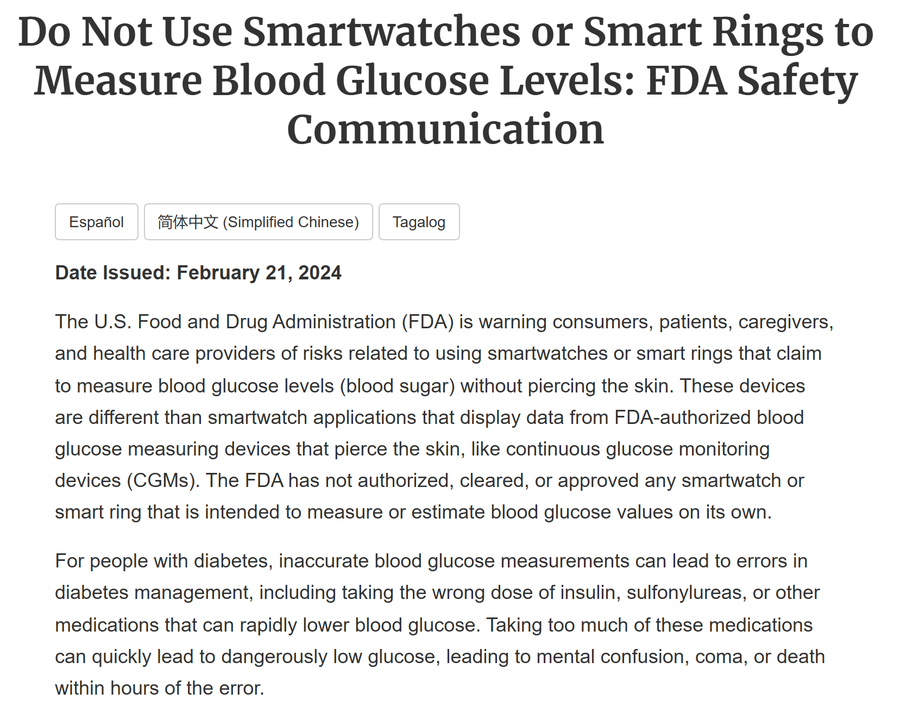
Consumer devices have their own gap between the claim and the capability. The FDA has warned that smartwatches and smart rings sold by dozens of companies do not measure blood glucose, whatever the marketing says.
Guided and unguided programs
Therapeutic programs are the family with the most trial evidence and the worst vocabulary. The distinction that holds is guided versus unguided: whether a human supports the person using the tool.
Human support and adherence
Guidance helps, but not in the way a brochure implies. Across 39 trials with 9,751 participants, guided internet CBT beat unguided on depression scores, with the effect concentrated in people who started more severely depressed. The more reliable effect is on whether people finish: guidance roughly triples completion. Unguided tools still beat no treatment on their own, at a number needed to treat of about eight. Mohr’s supportive accountability model supplies the mechanism: a person holds the user accountable to someone the user regards as trustworthy and competent, and the more motivated the user, the less support they need.
Trial numbers against field numbers
Across 93 mental-health apps with a median of 100,000 installs, median 30-day retention was 3.3 percent. Across seven interventions actually deployed in services, sustained use ran from 0.5 to 28.6 percent, and the authors note engagement is seldom even reported once a tool leaves its trial. Eysenbach named this the law of attrition in 2005: in any eHealth trial, a large share of users stop before the end, and this is expected rather than a defect of one study.
Comparator behind the effect size
A headline effect size is only as good as its control group. Smartphone mental-health interventions show an effect of about 0.56 against an inactive control and about 0.22 against an active one, so the same tool looks twice as strong depending on the comparison. In the broader CBT literature, more than 80 percent of anxiety trials used a waiting-list control, and only 17.4 percent were rated high quality. A waiting list is a comparison with no active treatment in it, which inflates the measured effect. This is Week 6’s evidence-checking applied to a client-facing tool: the comparator has to be checked before the effect is trusted.
Clearance and commercial survival
Regulation exists for the client-facing tools that make treatment claims. The FDA clears some as medical devices; Germany’s DiGA pathway lists prescribable ones; the UK’s NICE runs an early-value assessment. Clearance is not the same as survival. Pear Therapeutics held FDA clearances for a substance-use and an insomnia therapeutic and filed for bankruptcy in April 2023, unable to secure payment for them; Akili’s game-based ADHD therapeutic cleared the FDA and then could not find payers either. A partner that adopts a cleared digital therapeutic is depending on a company remaining in business, which is the exit and lock-in question from the strategy pitch in a clinical form.
When a client-facing tool caused harm
In May 2023 the National Eating Disorders Association took its chatbot Tessa offline two days before it was to replace the organization’s human helpline, after it gave a person seeking eating-disorder support advice on cutting calories and losing weight. Three US states have since enacted laws on AI in mental health care: Illinois bars AI from independently delivering therapy, Utah requires disclosure and real-time crisis protocols, and Nevada bars representing an AI as a licensed therapist. A client-facing tool that meets a person in crisis needs a path to a human, and the law is starting to require one.
Limits
A partner is better told these gaps up front than left to find them.
The evidence is thin exactly where the sector is. Most trials above were run in health care, and the two closest to social services, the Lambeth psychosis reminder trial and the 2-1-1 follow-up studies, are also the smallest. No study located measures whether a client-facing deployment changed an agency’s waiting time.
Uptake is not use. Being offered a portal, receiving a referral, and enrolling in a program are three different outcomes, and the gap between them is where most of the loss happens.
Nothing here measures what a client thought of the experience. Every figure on this page is an administrative outcome or a survey response, and none of them is a client’s account of being served this way.
Use in the assignments
Run Side A on the tool the organization is considering, and A4 in particular: what does it assume about its users, and who breaks those assumptions. For the Technology Strategy Pitch, the numbers here are the comparison a vendor claim has to beat.