Case bank
Cases for the Ethics Case Analysis and for class discussion. Every case here is already documented, so the required work is analysis and not original investigation. Off-bank cases are welcome with instructor approval.
Harm cases and success cases are held to the identical standard. If you pick a success, you still run the full protocol, and the Side B questions (what made it work, would it replicate) matter most.
Option A, Harm cases
| Case | Sector | Start here |
|---|---|---|
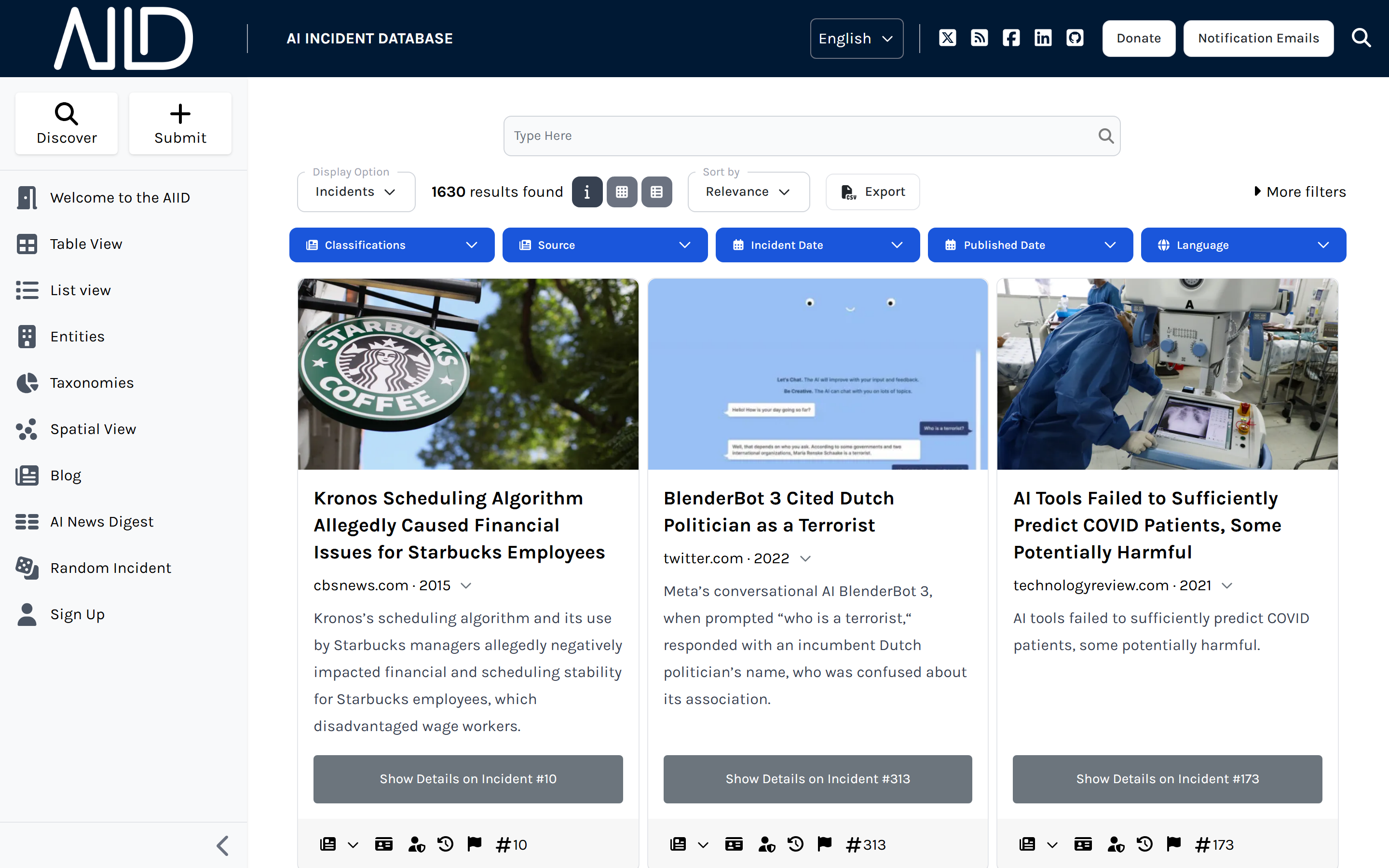
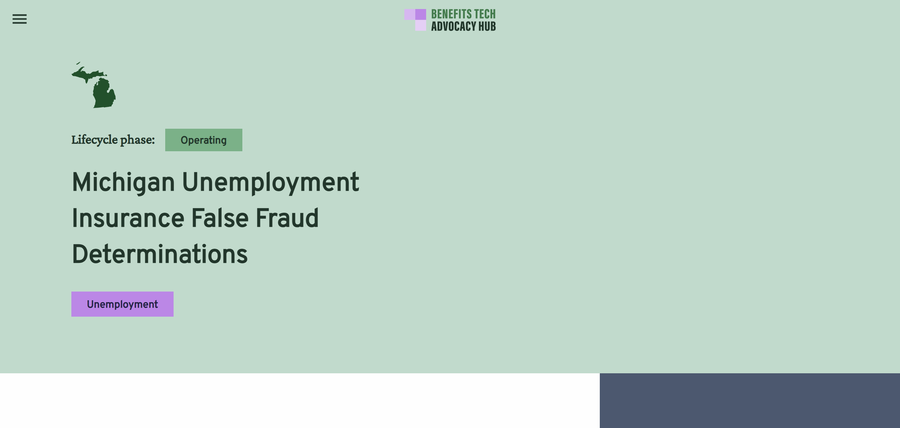
| Michigan MiDAS (the local one) | Unemployment benefits | Angwin’s Markup investigation; Bridge Michigan on the human toll. 40,000 people falsely accused of fraud at a 93% error rate. |
| Allegheny Family Screening Tool | Child welfare | Eubanks’ account plus the AP investigation and the DOJ scrutiny that followed. |
| Dutch childcare benefits scandal (toeslagenaffaire) | Child benefits | Amnesty International, Xenophobic Machines. It brought down a government. |
| Australia Robodebt | Benefits recovery | The Robodebt Royal Commission; a scheme ruled unlawful after years of automated debt letters. |
| SafeRent | Tenant screening | The 2024 settlement over algorithmic scoring of housing-voucher applicants. |
| TennCare Connect | Medicaid eligibility | The 2024 federal ruling; often called MiDAS’s successor. |
| UnitedHealth nH Predict | Health coverage | The class action over algorithmic denial of post-acute care, with a reported ~90% appeal-reversal rate. |
| LA VI-SPDAT | Homelessness services | The Markup’s 2023 investigation of vulnerability scoring. |
| ICE automated enforcement | Immigration | Just Futures Law and Mijente, Automating Deportation. |
| COMPAS | Criminal justice | ProPublica’s Machine Bias, the piece that started the modern fairness debate. |
Option B, Success cases
Evidence strength varies and naming it honestly is part of the assignment.
| Case | What it is | Evidence |
|---|---|---|
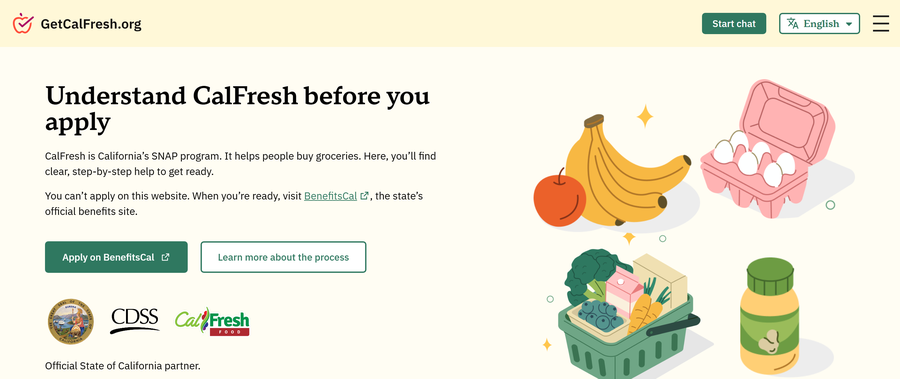
| GetCalFresh (Code for America) | Simplified SNAP applications | Strong; embedded trials over a decade |
| Annie MOORE / GeoMatch | Algorithmic refugee placement matching | Strong (Science 2018), plus a 2025 re-evaluation |
| LA County Homelessness Prevention Unit | Predictive risk used preventively | Strong; 71% reduction in shelter entry, equity-audited, randomized trial underway |
| Te Hiku Media / Papa Reo | Māori-owned speech AI under a data-sovereignty license | Promising; governance is the central evaluation criterion |
| NVDA screen reader | Free, blind-developer-led screen reader | Strong adoption; broke a $1,000 price monopoly |
| Trevor Project Crisis Contact Simulator | AI role-play for counselor training | Promising; the roleplay includes built-in content guardrails |
| mRelief | SMS-first benefits outreach | Promising; 2025 Maryland pilot |
| Clear My Record (Code for America) | Automated record clearance | Strong scale; 144,000+ convictions |
| Telehealth mental health expansion | Post-2020 access shift | Strong in systematic reviews, with equity caveats |
| M-Pesa (Kenya) | Mobile money | Strong and contested; the Science study and its methodological critique are both assigned territory |
| DHIS2 | Open-source health data platform, 70+ countries | Strong adoption; documented at national scale in multiple countries |
| Detroit Equitable Internet Initiative | Community-owned mesh broadband | Promising; ten years of Black-led operation, no formal outcome evaluation |
| Missing Maps / Humanitarian OpenStreetMap | Volunteer humanitarian mapping | Strong activity evidence; the Week 12 lab contributes to it |
Case outcomes
Discontinued projects are as instructive as running ones. Benefits Data Trust closed in 2024 after two decades. Woebot retired its consumer app in 2025 despite a strong randomized trial and FDA breakthrough designation. 18F, the federal digital services agency, was eliminated in 2025. Three different causes of death, none of them “the technology didn’t work.” The Week 13 pre-pitch consult returns to them when each group pressure-tests whether its plan survives after the grant, the consultant, or the champion leaves.
Self-check
Six failure types cover most of what the bank documents, and a case brief that names the wrong one usually goes on to recommend the wrong repair. Each item below states facts about a case the course covers, one of them a success case with no failure in it, and the drill is to name what kind of failure those facts describe.
Most items take one type and three take more than one. Select every type that applies, then press Check for that item. An item cannot be changed once it is checked.